
KPI overload can feel like an unmanageable universe of measures. This model classifies your KPIs so you know how, when and why to use each one.
An overload of KPIs can feel like a universe of measures that is impossible to try and make sense of. But we can reduce this KPI overload by giving some order to the chaos of our measures universe.
This order is based on the principle that we measure to improve things that matter, or at least make sure the things that matter are tracking well. Some things will be more urgent to improve, and others less urgent. Some things will be more important to improve, and others less important. And this offers dimensions to a model that helps us classify our KPIs or measures in a way that we can more easily decide how, when, why and whether to use them.
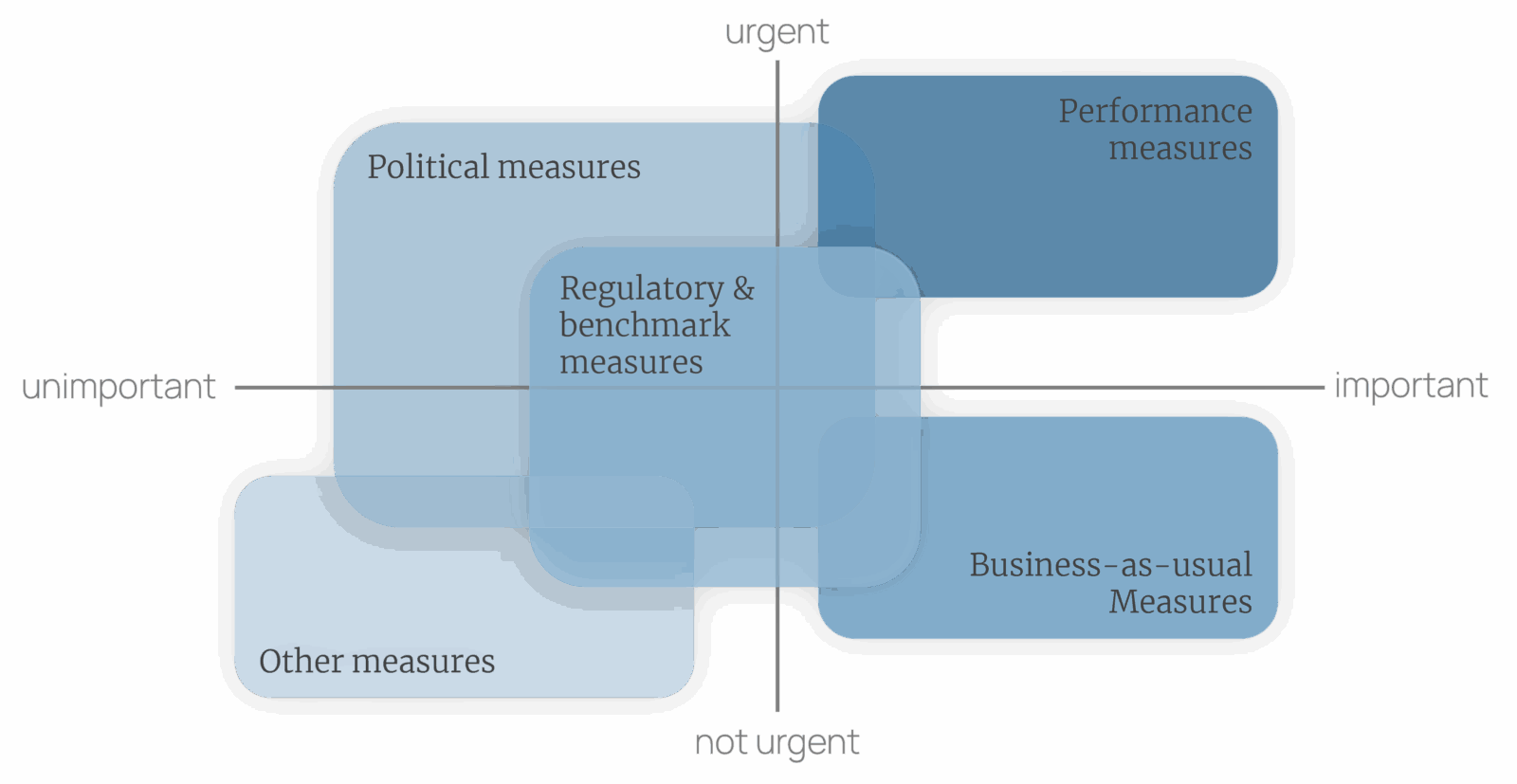
Our model gives us five basic classifications of KPIs in the measures universe:
- Performance measures
- Business-as-usual measures
- Political measures
- Regulatory and benchmark measures
- Legacy measures
Performance measures: important and urgent.
Performance measures are a subset within the measures universe. They are measures of business results prioritised by the current strategic direction. This makes KPIs in this classification both important and urgent to improve. The strategic direction acts like a gravity that pulls the relevant measures from all levels in the organisation into alignment with the current strategic goals.
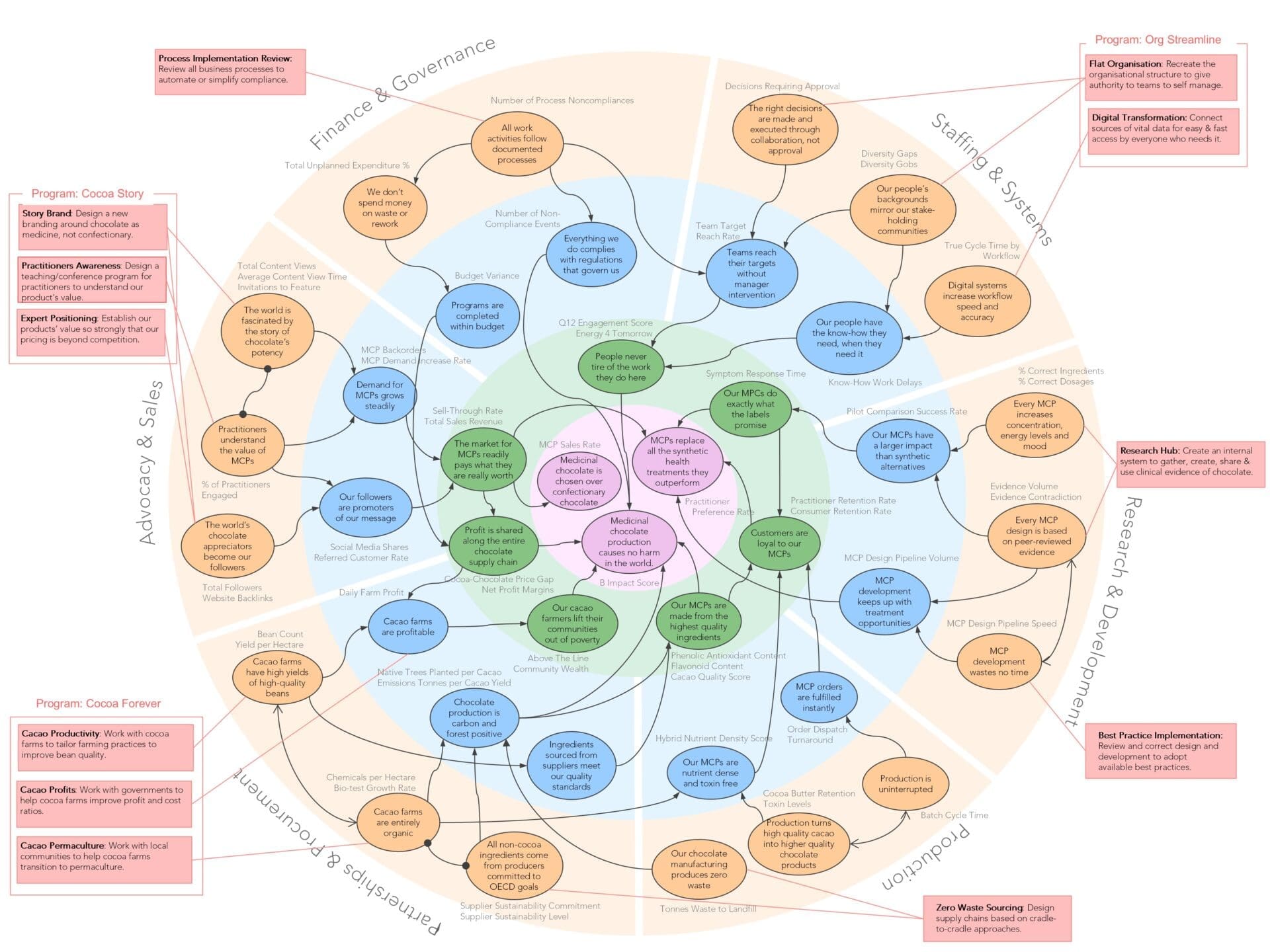
This gravity metaphor may have inadvertently been the inspiration for PuMP’s Results Map, which does exactly that: it pulls all the performance measures throughout the organisation or business into alignment with the current strategic goals.
Performance measures are the focus of performance dashboards, and should set the agenda of routine strategic performance review conversations. These are measures an organisation sets improvement targets for, and prioritises time and resources to close their performance gaps. And that’s what achieves the strategy.
Business-as-usual measures: important, but not urgent.
Business-as-usual measures are a subset of the universe of measures. These are measures of business results that are usually important, but are not urgent to improve, in the context of the current business environment and strategic direction.
Business-as-usual measures are important to track for day-to-day management purposes, to keep an eye on the important operational results that should be fixed if they break. While they have no place on performance dashboards, they may be part of the causal analysis of one or more performance measures.
In the past, business-as-usual measures may have been performance measures, and in the future they may become performance measures. But only if they are direct evidence of strategically important business results. That’s why, at any given point in time, business-as-usual measures will not overlap with the current performance measures.
Political measures: urgent but not always important.
Political measures are another subset within the universe of measures. They are measures of business results that are currently important to external stakeholders of the organisation, and therefore potentially urgent for the organisation to produce for these stakeholders.
More often than not, political measures are different from performance measures, because they align more to the strategic needs of the stakeholders and not to the strategic needs of the organisation. That’s why most political measures, for the organisation itself, are not important. There might be some overlap, however, particularly if external stakeholder interests become more aligned with the strategic intent of the organisation.
Rather than featuring in the organisation’s own strategic or operational reporting, political measures are reported in documents made for external stakeholders. In other words, they are an information product created mostly for external stakeholders.
Regulatory and benchmark measures: sometimes urgent and sometimes important.
Regulatory and benchmark measures are yet another subset within the universe of measures. Regulatory measures track business results that relate to legal, compliance and ethical requirements, usually specific to the sector or industry the organisation is part of. Benchmark measures can overlap with these, but tend to be more so the commonly used measures across the sector or industry, that are used to compare performance with similar organisations, ideally to discover new ways to improve.
Regulatory and benchmark measures can sometimes be important. Sometimes they can be performance measures, when they align directly with the current strategic direction of the organisation. And sometimes they can also be business-as-usual measures, when they align with important business processes or operational functions that currently are tracking well and not priorities for improvement.
If regulatory and benchmark measures do not currently live in the overlap with performance measures or business-as-usual measures, they are likely also part of an information product provided for and used by external stakeholders.
Legacy measures: not urgent and not important.
Every other measure in the universe of measures is like a piece of space junk. They are measures of things that aren’t important to the purpose or direction of the organisation, and aren’t urgent to improve. Usually they come into existence because the data was there and someone thought it should be used, despite not having a clear use for it. Often they are trivial counts of how much activity is being done.
Legacy measures are the time wasters. They waste time in data collection that’s not returning any value. They waste time and take up precious real estate in the production of performance reports. They waste time in meetings by sending decision-makers down rabbit holes or around in circles with no valuable outcome. More value comes from ceasing the reporting of legacy measures. If they are ever needed in the future, the future is when they can be revived.
It’s not a static universe.
Like planets, stars and galaxies in the real universe, KPIs or measures can relocate themselves in the measures universe too. Business environments flex and shift, and organisational strategies flex and shift in response. This flexing and shifting of strategy is the trigger for the relocation of your KPIs around your measures universe.
What can you do now? You can start with your current performance dashboards and classify the KPIs they contain. If there is not a clearly strong and direct alignment of any measure to a stratically important performance result, then it’s not a performance measure right now, and doesn’t belong there. Such measures are wasting your time and attention.
But where a measure is important to your organisation, or is an urgent information product to provide to external stakeholders, designing those measures well is vital. And a method like PuMP, which we usually position as the method for performance measures, can actually be used to design any measure that matters for any purpose.