

A locked rear wheel at 120kph on the track prompts a reframe of what the goal-measure-target-action cycle is really for: continual improvement.
It can often feel like no matter how well you plan and how hard you work, you never get a clear path to reaching your targets and achieving your goals. If you’re felling this now, then some reframing might help to keep you on the path of ongoing performance improvement.
This video of a recent track day incident perfectly illustrates the point I want to make in this article. On my previous track session this day, I got a new personal lap record with ease. So, I started this next session with two new ideas to try, to see if I could go even faster.
Take a look at what happened, in the video below, and then I’ll explain.
Note: I know people can be nervous watching motorcycle videos, but I promise this incident doesn’t qualify as a crash and only my ego got a little bruised. But you might hear a curse word in there, so be warned!
Just as I started to brake hard for the next turn, using my front brakes only, my rear brake self-applied and locked up the rear wheel and wouldn’t let go. The cause was a useless brake light switch screw that backed itself out. (Ducatis are renowned for their ability to vibrate screws loose. I have a routine of checking them regularly. Except for this one, apparently.)
As this particular screw backed out, it pushed against the rear brake lever and, maybe because the rear of the bike was light under my heavy front braking, it was enough pressure to operate the rear brake and lock up the rear wheel into a 100m skid from 120khp. I kept it upright until we came to a safe stop on the grass, but lost balance as I tried to reach down off the side of the track and sunk into said grass. We landed softly and neither of us were damaged.
The thing is, no-one could have predicted this. It was a random event that flung itself onto my path of earnest and deliberate performance improvement. I have been continually improving my technique and skill to reduce lap times from 91 seconds (on my first day, two years ago) toward a target of 74 seconds by the end of this year. I had just reached 75 seconds. And I felt confident that I could do what I had to do to reach 74… but my rear brake had other plans.
This was my last track day for the year, so alas, reaching my target was not to be!
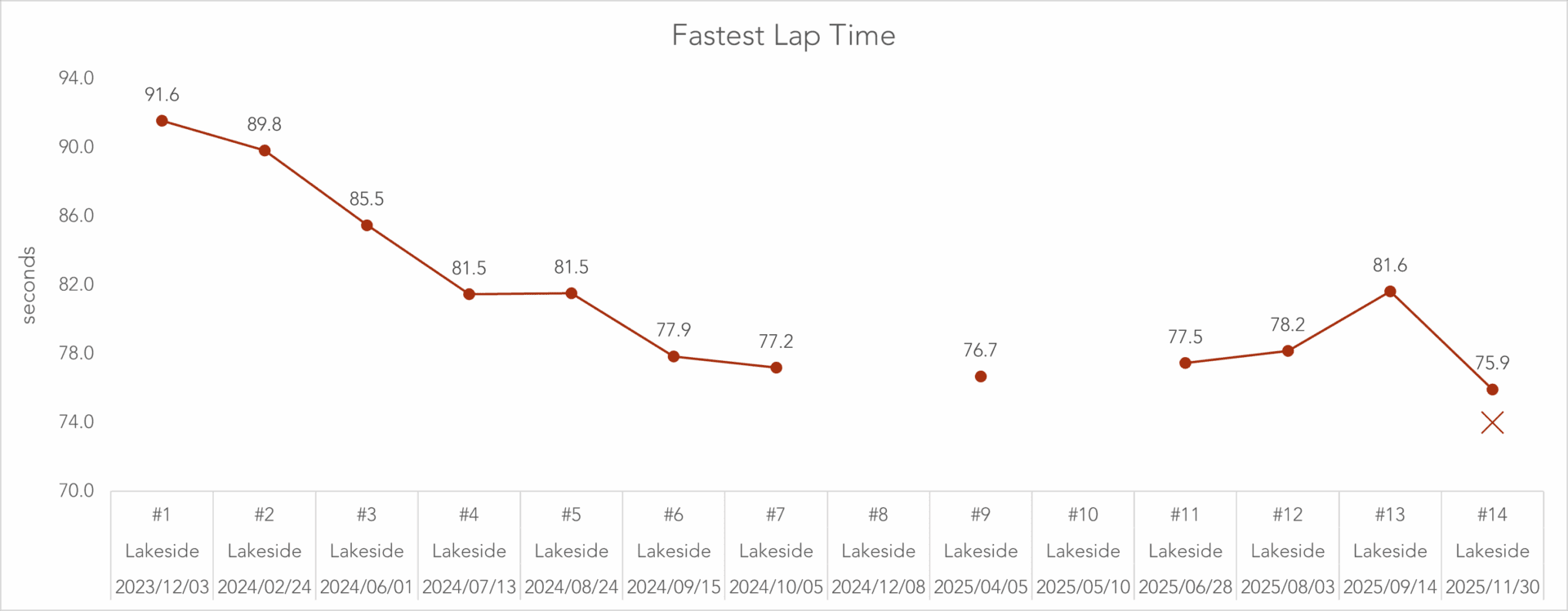
Note: Did you notice that my best time was 75.9, not 75 flat? In the drag racing world, a car that runs a 10.99-second quarter mile is still called a 10-second car, so I’m taking 15.9 as a 15-second lap time!!! It’s all relative, after all 😉
Have you ever experienced such things flinging themselves onto your path of earnest and deliberate performance improvement?
Of course you have; we all have! We all choose goals that matter, measure to monitor our progress toward them, set targets to inspire us to higher heights, and then take actions we believe will close our performance gaps. And we all strive to achieve those performance improvement goals in the real world, where most things are outside our control, and only some within our influence.
As frustrating as it is to face interruptions to our performance improvement pursuits, it’s worth keeping one thing in mind and one thing in heart:
- Keep in mind that any deliberate improvement is great news! So what if we don’t hit our targets? Despite not having control over everything in our world, we still find ourselves in a better place than we were before, and more wisdom to keep the improvement going.
- Keep in heart that any quest for improvement can intrinsically reward us. The process of striving to make things better can deliver us fun, thrills, learning, connection, or deep personal satisfaction.
I think this offers us the chance to reframe what the goal-measure-target-action cycle is really about. Having specialised in the field of organisational performance management for more than 30 years, what has bothered me most is how the goal-measure-target-action cycle so often finds itself inside a frame of winning or losing, or success or failure. That is not the true and noble purpose of the goal-measure-target-action cycle. The true and noble purpose of the goal-measure-target-action cycle is to inspire us to continually do better, be better and impact better. That’s why it’s a cycle.